

 English


The New Blue Ocean of the "Head Economy": Evolution from Silicone Crafts to Desktop Emotional Robots
Introduction: When the "Head Economy" Meets Artificial Intelligence
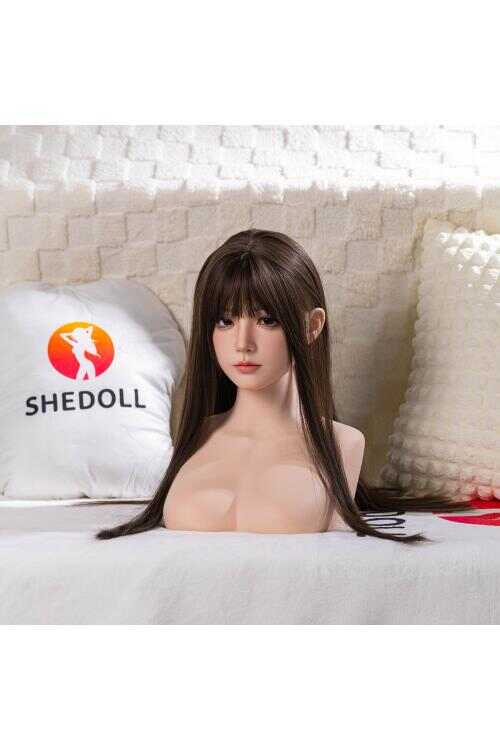
In the entity doll industry, a trend of "minimalism" is rising. With the compression of living spaces and users' pursuit of refined experiences, the low-cost customization of "buying only the head sculpture" has become a new market favorite. The rise of this "Head Economy" has not only lowered the entry barrier for players but also pushed the massive entity doll from the hidden corners of the bedroom to the center stage of the office desktop.
As a digital architect and industry observer, I believe this is not just a change in consumption habits, but an opportunity for hardware carrier evolution. When the Shedoll head sculptures in our hands already possess amazing realism and a mechanical foundation, a bold idea emerges: Can we introduce the OpenClaw kinetic architecture into existing head sculpture craftsmanship and, through "Edge-Cloud Collaboration," endow it with a true soul, creating a desktop emotional companion robot?
This article will deeply analyze the feasibility of this leap based on Shedoll's existing three generations of product technology accumulation.
I. Hardware Cornerstone: The Three-Generation Evolution of Shedoll Head Sculptures
To realize the robot concept, we must first examine our material basis. Shedoll's three generations of product iterations have actually, albeit unintentionally, paved the way for the "silicone robot" from static skin to dynamic skeleton.
Version 1.0: The Static Art
- Core Positioning: Ultimate visual restoration and makeup stability.
- Material Craft: Uses Platinum-grade silicone, offering two tactile choices: Soft Head and Hard Head. The hard head provides strong bone structure support, while the soft head offers realistic tactility.
- Proprietary Tech: Shedoll's exclusive inner shell ensures appearance does not collapse under different squeeze pressures.
- Functional Features: No oral activity support.
- Architect's Comment: The "defect" of version 1.0 is its advantage. Without mechanical interference, facial muscle lines are smooth, and makeup adhesion is extremely strong, rarely showing "powder caking" or cracks. It is the ideal for photographers and collectors, but as a robot carrier, it lacks necessary movement space.
Version 2.0: The Interactive Origin
- Core Positioning: Preliminary exploration of playability.
- Material Craft: Platinum-grade silicone, retaining only the Soft Head option (to adapt to oral stretching).
- Functional Upgrade: On the basis of the 1.0 exclusive inner shell, oral activity gears were implanted.
- Experience Revolution: Possessing the "mouth opening" function, the user scenario expanded from pure viewing to interaction.
- Architect's Comment: Version 2.0 solved the problem of "movement." Although it uses manual gears, it proved that implanting mechanical structures inside platinum silicone without destroying epidermal tension is feasible, providing physical verification for automated modification.
Version 3.0 (Chu Yue): The Animatronic Base
- Core Positioning: Deep anthropomorphism and emotional expression.
- Core Model: Currently debuting with the "Chu Yue" character.
- Material Craft: Platinum-grade silicone + Soft Head configuration.
- Technical Leap: Inheriting previous technology, adding orbital activity gears.
- Functional Features: Movable mouth + Blinking/Eye movement.
- Architect's Comment: Version 3.0 is a qualitative leap. Eyes are the windows to the soul; blinking and eye rotation are key to producing a "sense of life." From an engineering perspective, the 3.0 interior has reserved complex mechanical transmission space, which is the perfect hotbed for us to implant servo motors and sensor systems.
II. Core Discussion: Implementation Path of OpenClaw and Edge-Cloud Collaboration
The user's demand is to upgrade the 3.0 head sculpture into a "desktop emotional companion robot." To achieve this goal, we need to introduce two core concepts: OpenClaw Kinetic System (referring to open-source precision mechanical gripping/drive protocols) and Edge-Cloud Collaboration.
1. Technical Architecture: Edge-Cloud Collaboration
Traditional entity dolls are "dead," and fully local robots (like Sony Aibo) have limited computing power. The best solution is to put the brain in the cloud and keep the body on the desktop.
- "Edge" Side (Inside Shedoll Head):
- Perception Layer: Implant micro-microphone arrays in the cochlea and micro-cameras in the eyes.
- Execution Layer (OpenClaw Integration): Replace the 3.0 version's "manual gears" with micro silent servos. Utilize OpenClaw-like open-source motion control algorithms to convert digital signals into simulated muscle movements (mouth opening, blinking, eye following).
- Control Layer: Use ESP32 or Raspberry Pi Zero as the main controller, responsible for Wi-Fi connection and basic wake-word recognition (e.g., "Chu Yue, I'm here").
- "Cloud" Side (AI Brain):
- Cognitive Layer: Access Large Language Models (LLM) to understand the user's conversational depth and emotional state.
- Instruction Layer: While generating response voice in the cloud, generate synchronized "action codes" (Viseme) to instruct the head sculpture to coordinate lip shape and eye contact while speaking.
2. Concrete Implementation of OpenClaw Functions
Here, we define "OpenClaw" as an open emotional grasping and feedback mechanism.
- Visual Following: Utilize OpenCV algorithms to automate the 3.0 head's eye gears, realizing "face tracking." When you move while sitting at the desk, Chu Yue's gaze will gently follow you.
- Emotional Synchronization: When the cloud determines the conversation content is "happy," it drives the eye corner servos to curve slightly and the mouth corners to rise; when determined as "sad," the eyelids lower.
- Realistic Breathing: Simulate biological breathing rhythms using micro-undulations of the chest (if a bust) or head.
III. Feasibility Analysis and Challenges
The feasibility of modifying Shedoll 3.0 into a robot is extremely high, but it still faces three major challenges:
- The Contradiction between Heat Dissipation and Silicone:
- Issue: Platinum silicone is a poor conductor of heat. Chips and motors generate heat, and long-term heat accumulation may accelerate silicone aging or oil secretion.
- Solution: We must adhere to "Edge-Cloud Collaboration." Offload high-computing tasks to the cloud, retaining only low-power signal reception modules inside the head. Simultaneously, utilize the exclusive inner shell design to create heat conduction channels, dissipating heat from below the neck.
- Silence Requirements:
- Issue: In a desktop companion scenario, the "whirring" sound of motor rotation will instantly destroy immersion.
- Solution: Abandon ordinary gears and switch to Piezoelectric Ceramic Motors or high-quality brushless coreless motors to achieve library-level silence.
- Dynamic Durability of Makeup:
- Issue: Version 1.0 makeup is the most stable because it doesn't move. After 3.0 becomes a robot, high-frequency blinking and speaking will test makeup adhesion.
- Solution: Develop flexible film-forming setting sprays specifically for dynamic silicone, or use special coating processes in high-frequency activity areas like eyelids and mouth corners.
IV. Conclusion: The Ultimate Leap from Doll to Partner
Shedoll's versions 1.0 to 3.0 have already completed the physical accumulation from "looking human" to "moving." By introducing OpenClaw kinetic logic and Edge-Cloud AI, we have the full capability to incubate the Version 4.0 "Spirit Realm" series based on the 3.0 (Chu Yue).
This is not just a product upgrade, but the opening of a new era of Desktop Affective Computing. The future Shedoll will no longer be just a still life under a photographer's lens, but a soulmate who can see your frown, actively blink to inquire, and gently respond when you are exhausted from working late at night.


![[Shedoll] ChuYue 163cm Bar Succubus - H-cup Anime Babe ,54cm Thunder Thighs|Black Garter Belt Realism|Kneeling Doll ,Heating Pussy](https://shedoll.com/cache//static/media/lovedoll/chuyue/163cm/1-500x750-contain.jpg)
![[Shedoll] ChuYue 163cm Bar Succubus - H-cup Anime Babe ,54cm Thunder Thighs|Black Garter Belt Realism|Kneeling Doll ,Heating Pussy](https://shedoll.com/cache/-static-media-lovedoll-chuyue-163cm-7-500x750-contain.JPG)
![[SHEDOLL] 165cm Ice Queen · E-cup Librarian Fantasy · Tremor Heating Tech · Café Domination Set](https://shedoll.com/cache//static/media/lovedoll/jiangxiaowan/165cm 2.0/2-500x750-contain.jpg)
![[SHEDOLL] 165cm Ice Queen · E-cup Librarian Fantasy · Tremor Heating Tech · Café Domination Set](https://shedoll.com/cache//static/media/lovedoll/jiangxiaowan/165cm 2.0/1-500x750-contain.jpg)
![[SHEDOLL] JIANGXIAOWAN 158cm Xmas Angel · C-cup Lace Teddy · Heated Mini Body · Pure-Yuri Fantasy Gift](https://shedoll.com/cache//static/media/lovedoll/jiangxiaowan/158cm-2.0white/1-500x750-contain.jpg)
![[SHEDOLL] JIANGXIAOWAN 158cm Xmas Angel · C-cup Lace Teddy · Heated Mini Body · Pure-Yuri Fantasy Gift](https://shedoll.com/cache//static/media/lovedoll/jiangxiaowan/158cm-2.0white/B01A0773-500x750-contain.jpg)
![[SHEDOLL] Chu Yue 167cm | D-cup | Honor of Kings Gongsun Li Style | Dreamy Busty Slim Waist | Heated & Hair Implant Custom | Cosplay Fantasy Companion](https://shedoll.com/cache//static/media/lovedoll/chuyue/kosupure/B01A0724-500x750-contain.jpg)
![[SHEDOLL] Chu Yue 167cm | D-cup | Honor of Kings Gongsun Li Style | Dreamy Busty Slim Waist | Heated & Hair Implant Custom | Cosplay Fantasy Companion](https://shedoll.com/cache//static/media/lovedoll/chuyue/kosupure/B01A1127-500x750-contain.jpg)
![[SHEDOLL] Jasmine 168cm | D-cup Cat-Ear Maido Style | Sweetly Wild · Voluptuous Perky Breasts | Movable Eyes Customization | Ultimate Fantasy Doll for Cosplay Fans](https://shedoll.com/cache//static/media/lovedoll/jiangxiaowan/168cm-3.0head-movable-eye/lovedoll-jasmine- 168cm-3.0head-movable-eye-blue-mini-skirt-openeye-500x750-contain.jpg)
![[SHEDOLL] Jasmine 168cm | D-cup Cat-Ear Maido Style | Sweetly Wild · Voluptuous Perky Breasts | Movable Eyes Customization | Ultimate Fantasy Doll for Cosplay Fans](https://shedoll.com/cache//static/media/lovedoll/jiangxiaowan/168cm-3.0head-movable-eye/lovedoll-jasmine- 168cm-3.0head-movable-eye-blue-mini-skirt-Private parts display-500x750-contain.jpg)